
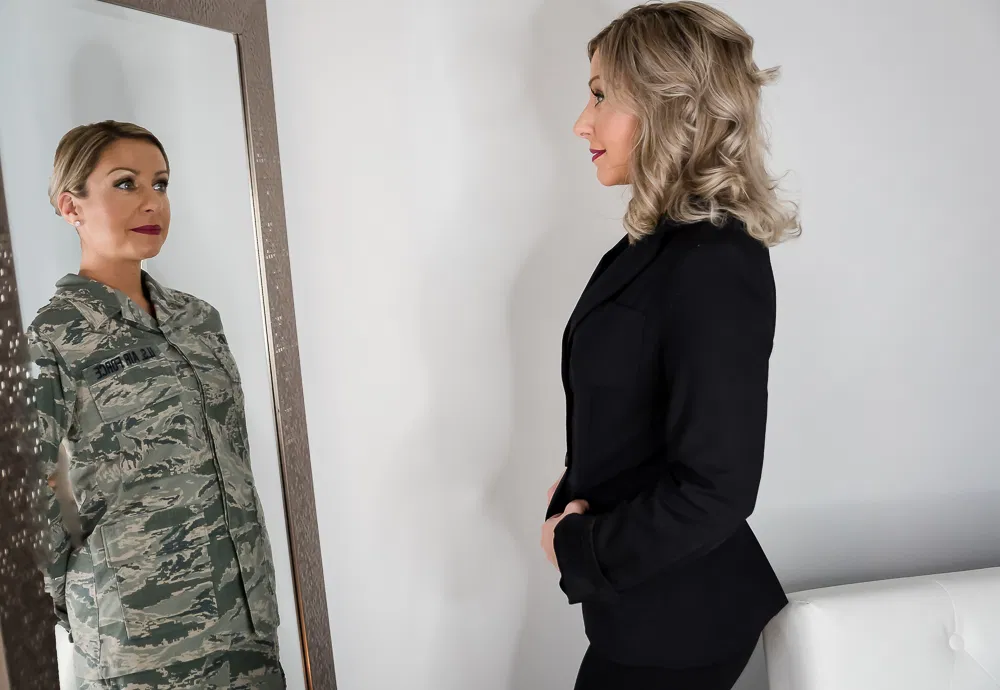

You’ve spent years, maybe decades, honing your skills in some of the most high-pressure environments on the planet. You’ve led teams through chaos, managed logistics that would make a Fortune 500 CEO dizzy, and mastered the art of the "mission first" mentality. But then, the uniform comes off. You step into the civilian world, and suddenly, the "mission" feels a little blurry. Have you ever stood in front of a mirror, seeing the leader you were in uniform, but wondering how that person fits into a corner office?
Trust me, I get it. The transition from combat to the C-suite isn't just a career change; it’s a total identity shift. It’s about taking that raw, battle-tested resilience and translating it into a language that corporate boards understand. But guess what? You already have the foundation. You just need the blueprint to level up your executive presence. If you're ready for clarity right now, take the Veteran Transition Quiz and see where you are in the journey.
Read on to find out how we’re going to bridge that gap together!
The Translation Game: From "Sir" to "Strategist"
One of the biggest hurdles in any Veteran transition is the language barrier. In the military, you don’t "optimize cross-functional workflows", you get the gear from Point A to Point B without getting anyone killed. In the C-suite, your ability to lead under pressure is your greatest asset, but if you can’t articulate how that translates to ROI or quarterly growth, you’re leaving money (and impact) on the table.
Leadership training for executives often focuses on theory, but as a Veteran, you’ve lived the practice. Your challenge is translating "Command and Control" into "Influence and Inspiration." Civilian teams don't always respond to a direct order the same way a platoon does. They need to understand the why.
So, how do we make that a reality? We start by auditing your "service-speak." Instead of talking about your rank, talk about your span of control. Instead of focusing on the mission, focus on the strategic outcomes. You aren't just a Veteran; you are a high-performance specialist who happens to have a military background.

Culture Shock: Trading the Uniform for the Suit
Let’s be real for a second, the civilian corporate culture can feel… well, a little messy. There’s less structure, more "office politics," and sometimes a lack of that clear-cut purpose you’re used to. It’s easy to feel like an outsider looking in.
But here’s the secret: Your military background has given you a level of adaptability that most executives spend years trying to learn. You’ve had to pivot in the middle of a desert; a shifting market trend is nothing compared to that!
At Krystalore Crews, we focus on Leadership Training that acknowledges this culture shock. We don’t just tell you to "fit in." We show you how to stand out by bringing that military discipline into a space that desperately needs it. We’re talking about punctuality, accountability, and the kind of grit that doesn't quit when a meeting goes long.
Resilience Training for Leaders: The 34-Minute Mindset
In the military, resilience is a survival skill. In the executive world, it’s a competitive advantage. Resilience training for leaders is about more than just "hanging in there." It’s about building a mental and physical fortress that allows you to perform at your peak, even when the stakes are high.
I always say, "How you do one thing is how you do everything." If your physical health is sliding, your executive decisions will eventually follow suit. This is why my approach is holistic. We don’t just work on your resume; we work on your mindset.
Have you heard of my 34-minute mindset? It’s about carving out that intentional time every single day to reset, refuel, and refocus. Whether it’s a quick hit of high-intensity movement or a deep dive into your strategic goals, that consistency is what builds the bridge from where you are to where you want to be.

Leading with Vulnerability (Yes, Really!)
Wait, did I just say "vulnerability" to a room full of Veterans? You bet I did.
One of the hardest parts of moving into executive leadership is realizing that you don’t have to have all the answers all the time. In the military, showing weakness can be dangerous. In the C-suite, showing humanity is what builds trust with your team.
Being an accessible expert means admitting when you’re "always on the go" and feeling the burnout. It means sharing your transition struggles so your team knows you’re in the trenches with them. When you combine military-grade discipline with genuine human connection, you become an unstoppable leader. If you want support tailored to your journey, explore Veteran Coaching.
The Executive Edge: Why You Need a Coach
You wouldn't go into a complex operation without a brief, right? So why are you trying to navigate the most important transition of your life without a coach?
An executive coach isn't just a cheerleader. They are your "Eye in the Sky," helping you spot the landmines before you step on them. They help you refine your Personal Brand and ensure that your transition is a launch, not a landing.
I’ve spent my career bridging the gap between high-performance athletics, military-style discipline, and corporate excellence. I know the road you’re walking because I’ve seen the struggle: and the massive success that happens on the other side.

Your Mission, Should You Choose to Accept It…
The transition is hard, but it is doable. You are already equipped with the resilience, the drive, and the leadership foundation. Now, it’s time to add the executive polish.
Are you ready to level up? Are you ready to take that "mission first" energy and apply it to your own personal growth?
Let’s make that a reality. Whether it’s through one-on-one executive coaching or joining us for the next Beyond Limits Bootcamp, the time to start is now. Don't let your transition be a period of "waiting to see what happens." Make it a strategic deployment into your next level of greatness.

Frequently Asked Questions (FAQs)
1. How do I translate my military rank into a civilian job title?
It’s less about the title and more about the responsibility. If you managed a company of 150 soldiers, you were essentially a Director of Operations. If you handled multi-million dollar equipment, you were a Senior Logistics Manager. Focus on the impact and the scale of your work, rather than the insignia on your shoulder.
2. What is the biggest mistake Veterans make in corporate interviews?
Using too much jargon! If the recruiter has to Google every third word you say, you’ve lost them. Focus on clear, punchy stories that highlight your leadership, problem-solving, and adaptability. Use the STAR method (Situation, Task, Action, Result) to keep your answers organized and high-impact.
3. How can I maintain my physical fitness while working a demanding executive job?
This is where the 34-minute mindset comes in! You don’t need two hours in the gym to stay sharp. Short, high-intensity workouts and intentional nutrition can keep your energy levels high. Remember, as an executive, your body is your most important piece of "equipment." Treat it like it!
4. Is "executive presence" something that can be learned?
Absolutely! Executive presence is a combination of confidence, communication, and appearance. For Veterans, the confidence is usually there, but the communication style often needs a "softening" to be effective in a collaborative civilian environment. Coaching is the fastest way to bridge this gap.
5. Why should I invest in a leadership transition program?
Because you don't know what you don't know. A structured program provides a roadmap, a community of peers who are in the same boat, and the specific tools you need to avoid common transition pitfalls. It’s an investment in your future self that pays dividends for the rest of your career.

Visualizing your next mission: The modern C-suite where your leadership will shine.
Let's get loud about your potential! Whether you're just starting your transition or you're already in the C-suite and feeling stuck, I'm here to help you push past those limits. Let's get started!